Career Training Path › Lineman schools
Lineman schools
If you finish a lineman program and work as a power-line installer, expect to start around $51,470–$67,270 a year and reach the trade's median of $95,320 with experience; the top quarter earn $109,740 or more (U.S. Bureau of Labor Statistics, May 2025). There are 68 accredited campuses offering it; their graduates' actual first-year median, counting every graduate whatever job they took, was $57,416, with median debt of $5,500.
What you'd earn working as a power-line installer
Annual wages for the 131,070 people employed as electrical power-line installers and repairers nationally — U.S. Bureau of Labor Statistics, Occupational Employment and Wage Statistics, May 2025. This is the figure to plan around if you intend to work in the trade.
How pay grows in this trade
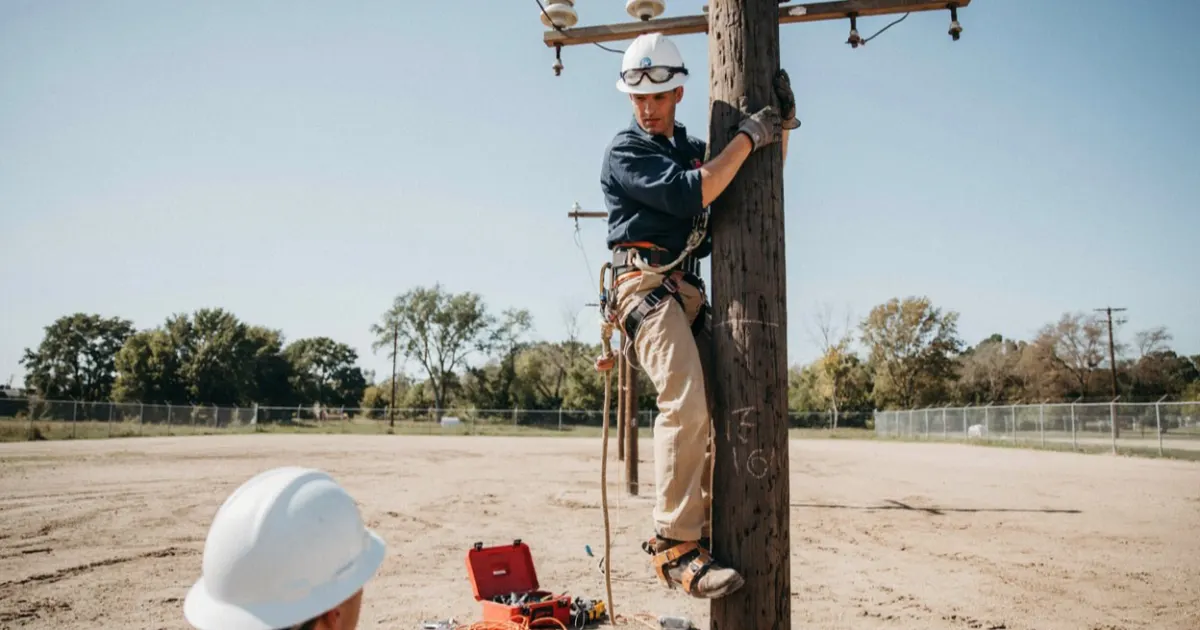
Getting in: A lineworker certificate (10–15 weeks) followed by a 3–4 year apprenticeship with a utility or contractor; a Class A CDL is usually required.
- Groundman and apprentice pay first; journeyman lineworker after the apprenticeship.
- Storm-restoration and traveling contractor work carries large overtime and per-diem premiums, which is why top-decile pay is so high.
- Crew foreman, troubleshooter and substation technician are the next steps.
Typical time to mid-career pay: 4 years. Licensing and apprenticeship rules vary by state and employer — verify with your state board before enrolling.
What graduates of these programs actually earned
Federal College Scorecard medians for every federally aided graduate of these programs, whatever job they took after finishing — including part-time work, apprentice wages and work outside the trade. That is why they sit below the trade's wage ladder above. Use them to compare schools against each other, not to judge what the career pays.
Find lineworker programs by state
9 campuses · $46,537 yr-1 pay Wisconsin
7 campuses · $53,821 yr-1 pay Georgia
5 campuses · $41,914 yr-1 pay Michigan
4 campuses · $46,384 yr-1 pay Minnesota
3 campuses · $44,647 yr-1 pay Nebraska
3 campuses · $54,275 yr-1 pay Oklahoma
3 campuses South Carolina
3 campuses · $34,570 yr-1 pay Texas
3 campuses · $57,416 yr-1 pay Colorado
2 campuses · $54,155 yr-1 pay Florida
2 campuses Iowa
2 campuses · $58,123 yr-1 pay Illinois
2 campuses Missouri
2 campuses · $50,000 yr-1 pay New Jersey
2 campuses · $127,300 yr-1 pay New York
2 campuses Arkansas
1 campuses Arizona
1 campuses Indiana
1 campuses · $79,864 yr-1 pay Maine
1 campuses Mississippi
1 campuses North Carolina
1 campuses North Dakota
1 campuses · $54,876 yr-1 pay New Hampshire
1 campuses New Mexico
1 campuses Oregon
1 campuses Pennsylvania
1 campuses · $89,120 yr-1 pay South Dakota
1 campuses · $45,593 yr-1 pay West Virginia
1 campuses Wyoming
1 campuses
Where lineworker graduates earn the most
Median program-level earnings one year after completion, states with 3+ reporting programs. Source: College Scorecard field-of-study data.
Public vs. non-profit vs. for-profit lineworker schools
| School type | Campuses | Median earnings, yr 1 | Median debt | Avg completion |
|---|---|---|---|---|
| Public | 68 | $57,416 | $5,500 | 51% |
How to choose a lineworker program
- Check accreditation first. Every campus listed here is accredited by an agency recognized by the U.S. Department of Education, or awarded federally reported credentials. Each profile names the accreditor and links to the federal record.
- Compare completion, not just tuition. A cheap program that half the class never finishes costs more than it looks. Profiles show each campus's completion rate against its state average.
- Look at earnings a year out, by program. The Scorecard reports median earnings for graduates of this specific program at this specific campus where cohorts are large enough. That is the number to compare, not national averages.
- Ask about federal aid. "Title IV eligible: Yes" means FAFSA, Pell Grants and federal loans apply. Many also accept GI Bill and WIOA funding — ask.
- Verify state licensing where it applies. Trades like lineworker may need a state license or certification after the program; the school should say which exam its graduates sit.
Earnings are median wages and self-employment income reported to the IRS (W-2 and Schedule SE) for graduates who received federal aid and were working and not enrolled, measured in the calendar year after finishing. They are pay only: health insurance, retirement contributions and other benefits are not included.
"What the trade pays" is the U.S. Bureau of Labor Statistics Occupational Employment and Wage Statistics survey (May 2025): annual wages for everyone employed in the occupation nationally, at the 10th, 25th, 50th (median), 75th and 90th percentiles. The 10th–25th percentile band is a fair guide to entry-level pay; the 75th–90th to experienced workers. Program earnings (above) are lower because they count every graduate of the program in their first year, including part-time work, apprentice wages and jobs outside the trade.
Sources: U.S. Department of Education College Scorecard (Integrated Postsecondary Education Data System (IPEDS) 2022-23 Completions survey; College Scorecard June 2026; Database of Accredited Postsecondary Institutions and Programs (DAPIP), September 2026), the Integrated Postsecondary Education Data System (IPEDS) Completions survey, and the Database of Accredited Postsecondary Institutions and Programs (DAPIP). Figures are federal medians and means for campuses in this program group; "not reported" means the federal file suppresses the value for privacy (small cohorts) — never an estimate.